
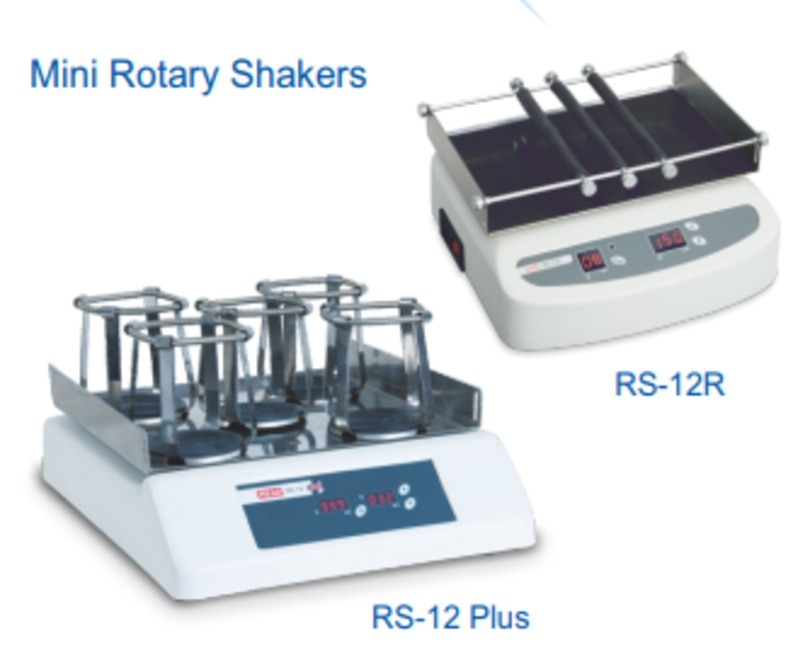
A low-priced shaker is not automatically suitable for pharmaceutical work: motion type, vessel retention, load, temperature requirements, and verification determine whether it supports a method or creates variability. By the end, you will be able to define the right mini shaker, reject unsuitable specifications, compare the laboratory shaker price with the total delivered cost, and prepare acceptance checks for a Mumbai laboratory.
Key takeaways
- Match orbital motion and speed range to your vessel and mixing method.
- Confirm platform load, vessel compatibility and speed control before comparing price.
- Record calibration, cleaning, maintenance and usage details for GMP traceability.
- Compare warranty, service response, spares and documentation—not only the quoted price.
What a Mini Rotary Shaker Actually Does in a Pharmaceutical Workflow
A mini rotary shaker moves sealed tubes, flasks, or small bottles through a controlled, low-shear motion so their contents blend without the aggressive turbulence of a homogeniser. It suits samples that need even contact rather than rapid particle-size reduction.
Useful pharmaceutical tasks include:
- Low-shear blending of liquid formulation samples
- Preparing reagents and buffers in small batches
- Supporting dissolution or extraction work
- Mixing stains, assay solutions, and wash solutions
- Checking small-batch formulation uniformity
The name is not precise enough for purchasing. One supplier may mean an orbital platform shaker; another may mean a rocking unit or an end-over-end tube rotator. Ask for the actual motion, speed range, orbit diameter or rotation geometry, and vessel-retention method.
| Motion | Mixing pattern | Best suited to |
|---|---|---|
| Orbital | Vessels travel in a circular orbit while staying upright; orbit diameter affects shear and mixing intensity | Flasks, bottles, and low-viscosity liquid blending |
| Rocking or rolling | A platform tilts or rocks, creating a gentle wave across the vessel | Bags, shallow vessels, staining, and delicate samples |
| End-over-end rotation | Tubes rotate around their own changing axis, repeatedly turning the contents over | Small tubes, extraction, and thorough low-shear contact |
| Vortexing or magnetic stirring | Localised swirling or an internal stir bar creates stronger fluid movement | Rapid dissolution or concentrated mixing, not gentle rotary work |
A mini rotary shaker is the wrong choice for high-shear dispersion, breaking cell pellets, suspending dense powders, mixing viscous creams, or controlling incubation temperature. An affordable lab equipment for pharmaceutical companies purchase still needs the motion matched to the sample.
The Procurement Specification: Motion, Vessels, Load and Controls
State the operating envelope before requesting prices. If you are sourcing a mini rotary shaker in Mumbai, name the motion rather than accepting “rotary” as a specification; suppliers may mean orbital, rocking, or end-over-end rotation.
| Motion | Specify in the quotation request | Why it matters |
|---|---|---|
| Orbital | Orbit diameter in mm and rpm range | Orbit size changes mixing pattern and shear at the same rpm |
| Rocking | Rocking angle, cycle rate, and platform size | Defines the rolling action and vessel stability |
| End-over-end | Rotation speed, tube angle, and holder type | Prevents confusion with platform shakers |
Ask each supplier to state:
- Platform length and width, vessel count, compatible vessel diameter and height, and the retention method: clamps, straps, racks, or an elastomer mat.
- Maximum load in kg, including vessels, and speed range at that load; request vibration limits or controller cut-off behaviour.
- Speed resolution, timer range, continuous or timed operation, ramping, and restart behaviour after power failure.
- Footprint, total height, electrical supply, plug type, and noise specification.
- Construction of the platform and mat, plus compatibility with alcohols, alkaline detergents, oxidising disinfectants, and repeated wiping.
- Temperature range, stability, and uniformity if the method needs control; state whether a chamber or external system is included.
For sterile work, specify closed vessels, decontamination provisions, and validated handling separately. Shaker motion does not make an open process aseptic.
How to Judge Gentle, Uniform Mixing and Avoid the Wrong Application
Verify consistency with a small challenge run, not by trusting the speed display. A simple control knob gives open-loop control: its setting is not proof of actual vessel speed, and equal rpm does not mean equal mixing when orbit diameter differs.
- Balance the platform with the intended vessel count, fill volume, and load. Record vessel type, liquid volume, rpm, orbit diameter, run time, and room temperature.
- Run at least three identical vessels together, then repeat the run on another occasion. Watch for drifting vessels, liquid climbing the walls, foaming, or visibly different motion.
- Sample each vessel from the same location and time point. Compare a measurable result such as concentration, pH, absorbance, suspended-solid content, or dissolution value.
- Verify actual speed with the supplier’s specified method, and record the acceptance limit before testing. Investigate a failed result instead of increasing rpm until the samples appear uniform.
A mini shaker is the wrong instrument for rapid homogenisation, high-shear dispersion, breaking cell pellets, suspending dense powders, or mixing viscous formulations. Choose a controlled-temperature system when the method specifies incubation: a speed controller cannot provide temperature range, stability, or uniformity.
For sterile media, cell culture, or sterility-sensitive samples, closed vessels and validated environmental handling remain separate requirements.
Compare total delivered cost rather than laboratory shaker price alone. Include clamps or platform, freight, installation, verification visits, replacement mats, cleaning compatibility, warranty, and Mumbai service response time.
What GMP and Quality-Control Records Should Cover
A shaker supporting regulated work needs qualification tied to its intended use, not just a satisfactory factory test. Under USP General Chapter 1058, document user requirements, supplier documents, installation qualification (IQ), operational qualification (OQ) and performance qualification (PQ).
ISO/IEC 17025 requires equipment to suit its use and to be maintained or calibrated where measurement validity depends on it. Development screening may need speed verification with an independent tachometer; QC use requires an approved method, acceptance limits and review.
Before release, record:
- Model, serial number, location, electrical supply, platform, clamps and maximum validated load
- Actual speed at selected setpoints with the stated working load, plus timer accuracy and vibration observations
- Vessel configuration, balance limits, test method, reference instrument ID and results
- Cleaning agent, contact time, rinse method and inspection result
- Maintenance actions, replacement mat or clamp, parts used, date, technician and next due date
- Deviations, impact assessment, corrective action, approval and equipment status
Do not treat an open-loop knob or display as proof of vessel speed. Verify speed at the operating load because a small motor can slow or vibrate with a full rack. Define requalification triggers: relocation, repair, controller change, failed verification or a new vessel/load configuration.
Specify cleaning compatibility before purchase. Alcohol, alkaline detergent and oxidising disinfectant can damage powder coating, elastomer mats, plastics or adhesive labels; record the approved procedure and replace damaged contact surfaces. A shaker does not make open handling aseptic: sterile work also needs closed vessels, decontamination, environmental controls and validated handling.
How to Compare a Mumbai Supplier Beyond the Quoted Price
A quoted shaker price is only the starting figure. Calculate total ownership cost as delivered equipment, platform or clamps, freight to your Mumbai site, installation, GST if excluded, warranty limits, preventive-maintenance visits, verification, replacement mats, and service travel or downtime.
| Compare | Ask the rotary shaker supplier | Cost consequence |
|---|---|---|
| Motion and capacity | Is it orbital, rocking, or end-over-end, and does the stated speed hold at maximum load? | An overloaded platform can lose speed, vibrate, or trigger controller limiting. |
| Included hardware | Do platform, clamps, tube racks, vessel retainers, and mats come in the quote? | Missing accessories become immediate purchase costs. |
| Temperature | Is it ambient-only, or does the price include a chamber or external control system? | A speed controller cannot provide incubation temperature. |
| Service | What are response time in Mumbai, warranty exclusions, visit charges, and preventive-maintenance frequency? | A cheap unit becomes expensive during a failed QC schedule. |
| Verification | Which factory test record is supplied, and can IQ/OQ verify speed, timer, motion, load stability, and temperature? | You avoid paying later for undocumented checks. |
Before comparing an affordable lab equipment for pharmaceutical companies mini rotary shaker in mumbai quote, request the loaded-speed test at your vessel count and maximum mass. Confirm the platform dimensions, electrical supply, and vessel-retention method. A knob-controlled display is not proof of actual speed; ask how you will verify it.
REMI can be included in the same comparison, using identical load, accessory, service, and documentation requirements rather than brand claims.
Related product
 | Laboratory Product Designed for gentle and uniform mixing of fluids in test tubes and glass vessels of various capacities, REMI’s range of laboratory shakers ensures... View product → |
Frequently asked questions
What does a mini rotary shaker do in a pharmaceutical workflow?
It moves sealed tubes, flasks or small bottles in controlled, low-shear motion to promote even contact and blending without the aggressive turbulence of a homogeniser.
Which specifications matter when buying a mini rotary shaker?
Check motion type, speed range, platform size, vessel restraints, maximum load, timer, controls, electrical requirements and compatibility with your intended vessels.
How can you judge whether mixing is gentle and uniform?
Match the shaker’s motion and speed to the formulation and vessel, secure every container, and verify uniformity with a defined test rather than relying on appearance alone.
What records should a GMP laboratory keep for a shaker?
Maintain equipment identification, qualification or calibration records, cleaning and maintenance logs, usage details, deviations, repairs and relevant operating instructions.
How should you compare a Mumbai rotary shaker supplier beyond price?
Compare delivered specifications, warranty terms, installation, service response, spare-parts access, documentation, calibration support and the supplier’s understanding of your workflow.